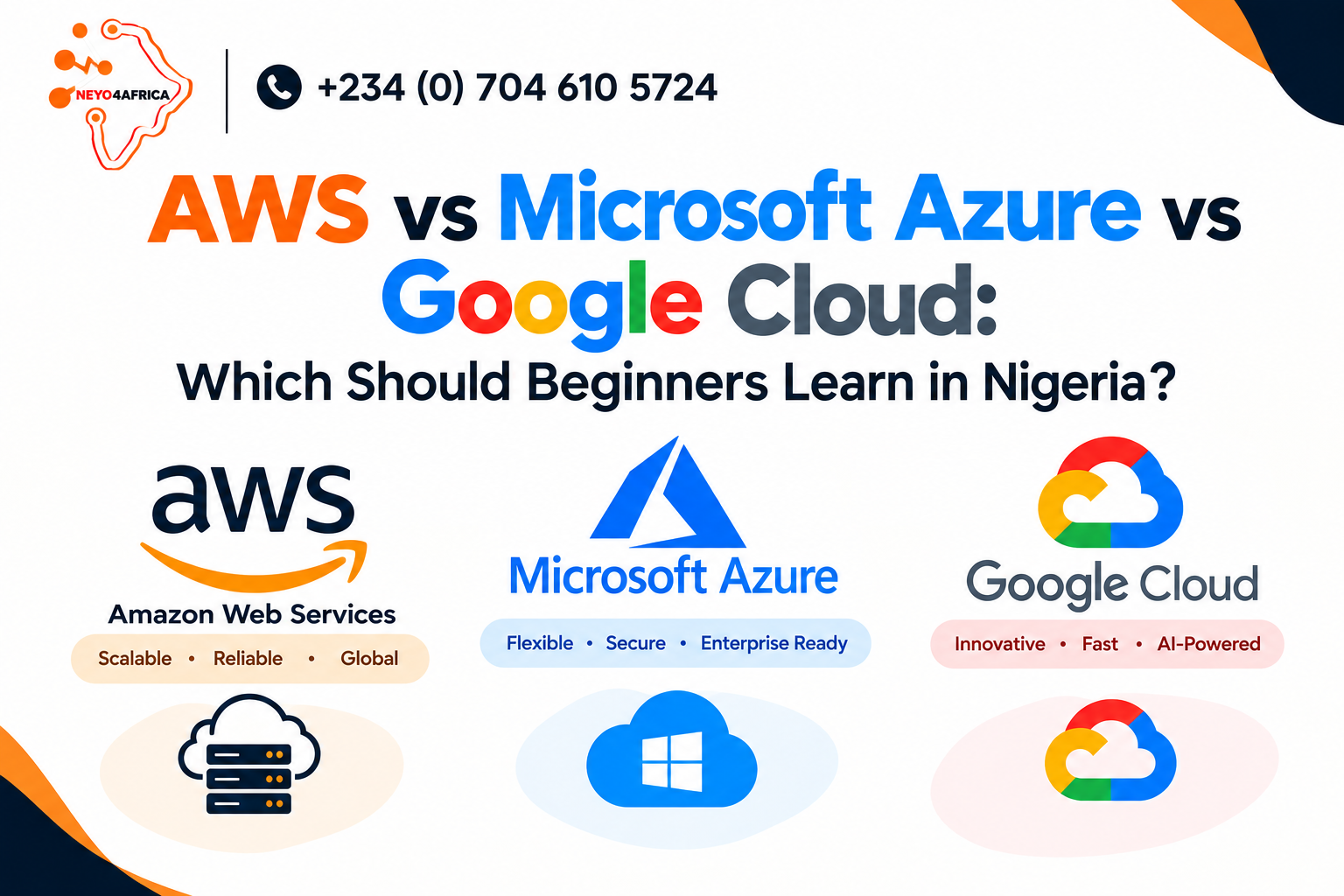
Cloud computing has become an important part of modern technology. Businesses use cloud platforms to host websites, run applications, store data, manage digital services, and support software development.
For anyone planning a career in cloud computing, DevOps, cybersecurity, or software engineering, three platforms frequently appear in learning resources and job descriptions: Amazon Web Services (AWS), Microsoft Azure, and Google Cloud.
But which one should beginners in Nigeria learn first?
The answer depends on your career goals, the companies you want to work for, your current technical skills, and the types of projects you want to build. This guide compares the three platforms and explains how to choose a suitable starting point.
What Is Cloud Computing?
Cloud computing means accessing computing resources such as servers, storage, databases, networking, and software over the internet instead of managing all the required physical infrastructure yourself.
For example, a Nigerian business can host its website on a cloud platform instead of purchasing and maintaining its own physical server. As the business grows, it can adjust its resources to accommodate more visitors and changing needs.
Cloud computing is used in areas such as:
- Website and application hosting.
- Online banking and digital payments.
- Data storage and backup.
- Software development and testing.
- Artificial intelligence and data analytics.
- Business applications and digital services.
AWS, Microsoft Azure, and Google Cloud provide services that support these use cases, although their products, pricing models, and technical approaches differ.
1. What Is Amazon Web Services (AWS)?
Amazon Web Services, commonly known as AWS, is Amazon's cloud computing platform. It offers services for computing, storage, networking, databases, security, analytics, and many other workloads.
AWS is used by organisations ranging from startups to large enterprises. Its broad service catalogue and extensive learning resources make it a useful option for people beginning their cloud computing journey.
What can you do with AWS?
With AWS, you can:
- Host websites and web applications.
- Store files and backups using Amazon S3.
- Run virtual servers using Amazon EC2.
- Create managed databases.
- Deploy applications without managing servers using AWS Lambda.
- Configure access permissions and security controls.
- Build infrastructure for DevOps and software delivery.
Who should learn AWS?
AWS is worth considering if you want to explore:
- Cloud engineering.
- DevOps engineering.
- Cloud support and infrastructure operations.
- Backend application deployment.
- Cloud architecture.
Beginner learning resource: Getting Started with AWS
AWS also offers introductory digital training through its AWS Cloud Practitioner learning resources.
2. What Is Microsoft Azure?
Microsoft Azure is Microsoft's cloud computing platform. It provides services for hosting applications, managing virtual machines, storing data, networking, security, analytics, and artificial intelligence.
Azure is especially relevant to organisations that already use Microsoft technologies, such as Windows Server, Microsoft Entra ID, Microsoft 365, and other enterprise systems.
What can you do with Microsoft Azure?
With Azure, you can:
- Host websites and web applications.
- Create and manage virtual machines.
- Deploy applications and APIs.
- Manage cloud storage and databases.
- Configure user identities and access permissions.
- Connect cloud services with existing business systems.
- Support enterprise infrastructure and hybrid cloud environments.
Who should learn Azure?
Azure may be a good starting point if you want to work in:
- Enterprise IT.
- Cloud administration.
- Microsoft-based infrastructure environments.
- Cloud security and identity management.
- Application development using Microsoft technologies.
For example, a company that already relies heavily on Microsoft products may prefer Azure services that integrate with its existing systems.
Beginner learning resource: Microsoft Learn — Azure Fundamentals
This introductory learning path covers basic cloud concepts, Azure services, and cloud management.
3. What Is Google Cloud?
Google Cloud is Google's cloud computing platform. It provides services for computing, storage, networking, databases, application deployment, data analytics, and artificial intelligence.
Google Cloud can be particularly relevant to learners interested in data engineering, analytics, machine learning, Kubernetes, and cloud-native application development.
What can you do with Google Cloud?
With Google Cloud, you can:
- Host websites and applications.
- Run virtual machines using Compute Engine.
- Store files using Cloud Storage.
- Deploy containerised applications.
- Analyse data using BigQuery.
- Build and deploy machine learning solutions.
- Manage cloud infrastructure and security.
Who should learn Google Cloud?
Google Cloud is worth considering if you want to explore:
- Data engineering and analytics.
- Machine learning and AI infrastructure.
- Cloud-native application development.
- Kubernetes and container-based systems.
- Cloud engineering and operations.
Beginner learning resource: Google Cloud training and certifications
Google Cloud provides foundational learning options, including Cloud Digital Leader, as well as more technical credentials for people progressing into cloud engineering.
AWS vs Azure vs Google Cloud: Main Differences
Although all three platforms provide cloud computing services, their ecosystems and areas of emphasis differ.
FeatureAWSMicrosoft AzureGoogle Cloud
Provider | Amazon | Microsoft | Google
Main strengths | Broad cloud services and deployment options | Enterprise and Microsoft ecosystem integration | Data analytics, AI and cloud-native workloads
Compute service | Amazon EC2 | Azure Virtual Machines | Compute Engine
Object storage | Amazon S3 | Azure Blob Storage | Cloud Storage
Serverless computing | AWS Lambda | Azure Functions | Cloud Run functions and related serverless services
Data analytics example | Amazon Redshift | Microsoft Fabric and Azure analytics services | BigQuery
Suitable interests | Cloud infrastructure, DevOps and application hosting | Enterprise IT, administration and Microsoft technologies | Data, analytics, AI and containerised workloads
The products in each row are examples rather than exact equivalents. Each provider has its own features, limitations, pricing, and service integrations.
Which Cloud Platform Is Best for Beginners in Nigeria?
There is no single platform that is best for every beginner. The most useful choice is the platform that aligns with the work you want to do.
Choose AWS if you want a broad cloud foundation
AWS is a reasonable starting point if you want to explore general cloud engineering, application hosting, infrastructure, or DevOps.
Its extensive documentation and learning ecosystem can help you practise a wide range of cloud concepts.
Choose Microsoft Azure if you prefer enterprise IT
Azure is a sensible choice if you are interested in system administration, enterprise infrastructure, Microsoft technologies, or organisations that already depend on Microsoft's business ecosystem.
Choose Google Cloud if you are interested in data and AI
Google Cloud is worth considering if your interests include data analytics, machine learning, cloud-native applications, or modern container-based infrastructure.
These are practical starting recommendations, not guarantees of employment or claims that one platform always has more opportunities in Nigeria. The needs of individual employers vary.
Which Platform Has More Job Opportunities in Nigeria?
Job opportunities depend on the employer, role, experience level, and skills required. Rather than relying on general rankings, examine vacancies for the career you want to pursue.
For a useful comparison, search for job descriptions containing terms such as:
- AWS Cloud Engineer.
- Azure Administrator.
- Google Cloud Engineer.
- DevOps Engineer.
- Cloud Support Engineer.
- Cloud Security Engineer.
Look at vacancies in Nigeria and remote roles you are eligible to apply for. Record which cloud platforms, tools, and qualifications appear repeatedly.
This gives you a more relevant picture of demand for your intended career than choosing a platform solely because someone claims it is the most popular.
Remember that cloud skills are only part of the picture. Employers may also expect knowledge of Linux, networking, scripting, security, troubleshooting, and practical deployment.
Do You Need to Learn All Three Cloud Platforms?
No. Beginners generally benefit from learning one platform well before moving to another.
AWS, Azure, and Google Cloud share important concepts, including:
- Virtual machines and computing resources.
- Storage and databases.
- Networking.
- Identity and access management.
- Monitoring and logging.
- Security and permissions.
- Resource management and billing.
Once you understand these concepts on one platform, learning another becomes easier. However, service configurations and implementation details can differ, so not everything transfers directly.
Trying to learn all three at the same time can make the early stages unnecessarily confusing.
How to Start Learning Cloud Computing in Nigeria
You do not have to begin with an advanced certification. Start with fundamental skills, practise with small projects, and gradually increase the complexity of your work.
Step 1: Learn basic networking
Understand IP addresses, DNS, ports, HTTP/HTTPS, firewalls, and how devices communicate over networks.
These concepts help you understand how cloud applications connect to users and other services.
Step 2: Learn Linux fundamentals
Practise using the command line, managing files and permissions, inspecting processes, and troubleshooting common problems.
Linux is widely used in cloud environments, so these skills can support both cloud engineering and DevOps.
Step 3: Choose one cloud platform
Select AWS, Azure, or Google Cloud based on your interests and the requirements of the roles you want to pursue.
Learn the platform's core services for computing, storage, networking, identity, and monitoring.
Step 4: Build a simple project
Try hosting a basic website or deploying a small application. Learn how to configure access permissions, check logs, and monitor the resources you create.
A completed project can help demonstrate your understanding more clearly than reading tutorials alone.
Step 5: Learn automation
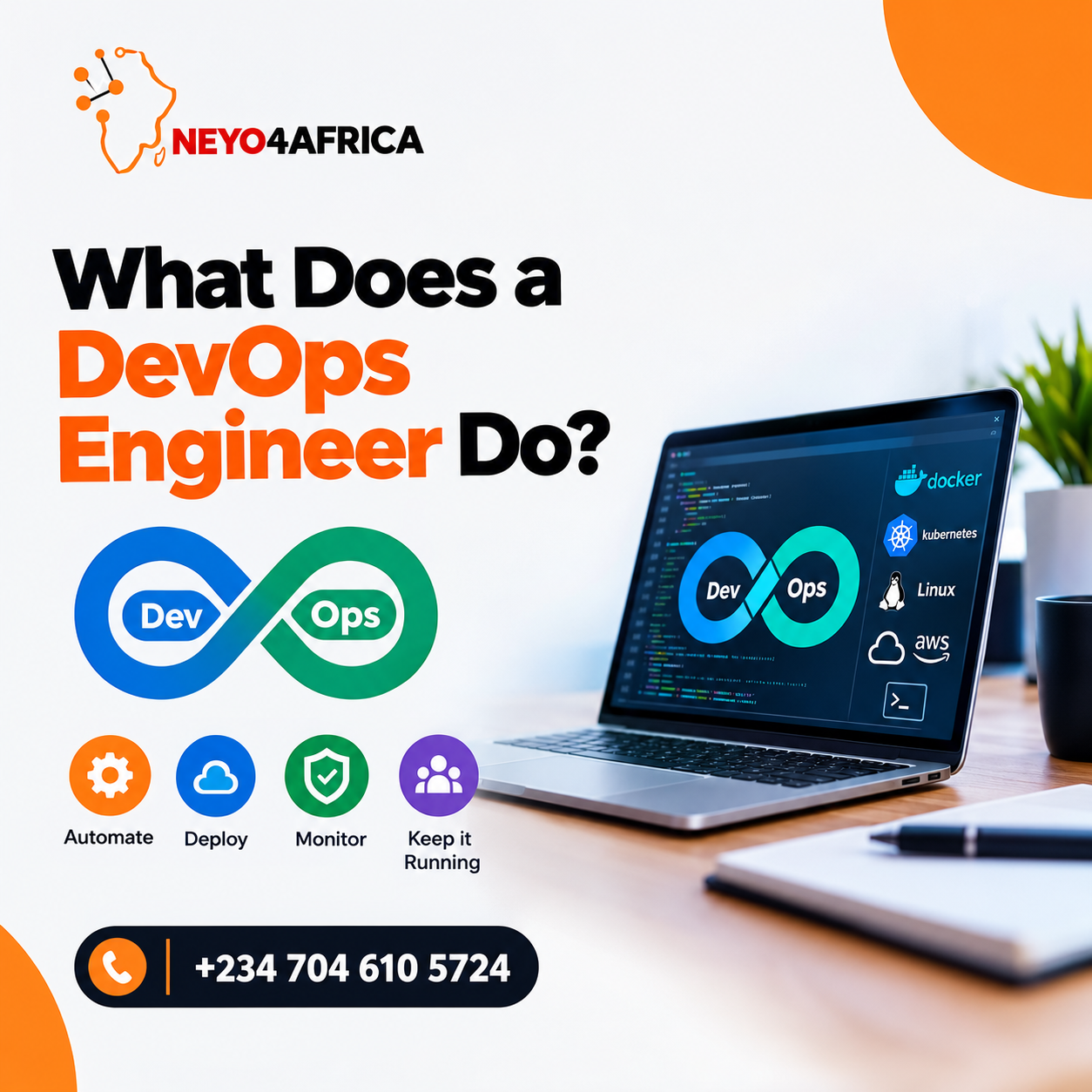
Once you understand the basics, explore Git, basic Python or Bash scripting, and infrastructure automation tools such as Terraform.
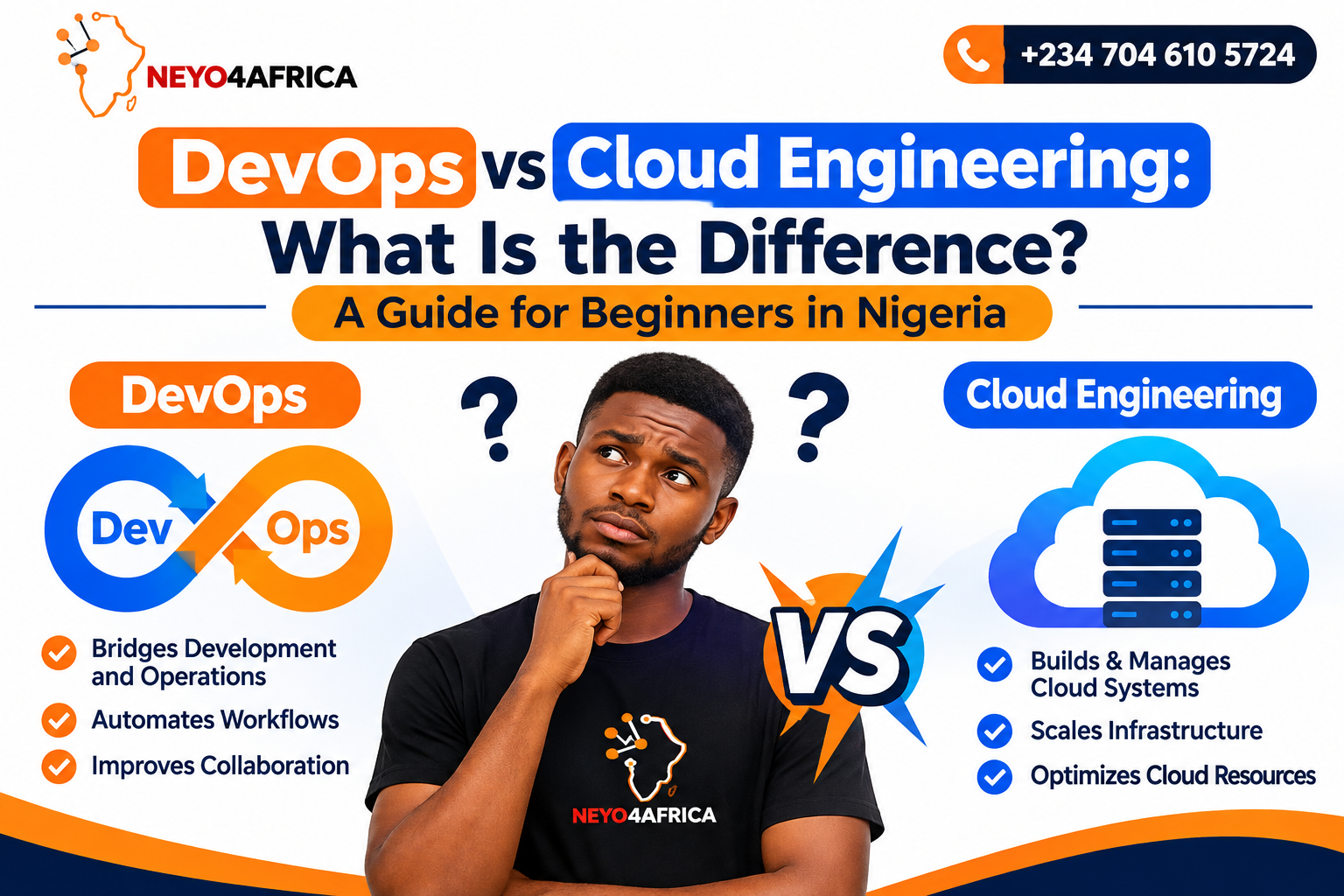
If you want to move toward DevOps, progress into CI/CD pipelines and Docker. If you prefer cloud administration, spend more time on networking, identity, monitoring, and infrastructure management.
Step 6: Consider a certification
A certification can provide structure and demonstrate foundational knowledge, but it is not a guarantee of employment.
Possible introductory options include:
- AWS: Explore AWS's foundational cloud learning resources and the appropriate current entry-level certification.
- Azure: Microsoft Azure Fundamentals.
- Google Cloud: Cloud Digital Leader for broad cloud concepts, or a more technical pathway if you already have hands-on experience.
Check the official provider's current exam requirements, fees, and syllabus before paying for an examination.
Can You Learn Cloud Computing for Free?
You can start learning many cloud computing concepts through free online training and documentation. All three providers offer learning resources for beginners.
Be careful when creating cloud accounts. Free offers, eligible services, usage limits, and promotional credits can change. Some resources may incur charges if you exceed a quota or leave services running.
Before launching a project, review the provider's pricing and billing documentation. Set available budget alerts, use the smallest suitable resources, and delete resources you no longer need.
Frequently Asked Questions
Which is easier to learn: AWS, Azure, or Google Cloud?
There is no universal answer. Your experience, learning resources, and familiarity with related technologies influence how quickly you learn. Begin with basic cloud concepts and choose the platform that fits your goals.
Which cloud platform should a Nigerian beginner learn first?
AWS is a reasonable general starting point for someone interested in cloud infrastructure or DevOps. Azure may be a better fit for Microsoft-focused enterprise IT, while Google Cloud may suit learners interested in data and AI. Review relevant job descriptions before making your decision.
Can I get a cloud computing job without a degree?
Some employers consider candidates based on skills, experience, certifications, and projects rather than requiring a particular degree. Others have formal educational requirements. Check the eligibility criteria for the roles you want.
Do cloud engineers need programming skills?
Advanced programming is not always required to begin learning cloud computing, but scripting and automation are valuable for many technical roles. Python, Bash, and infrastructure configuration tools are useful skills to develop.
Are cloud certifications worth it?
They can help you organise your learning and demonstrate knowledge of a platform. Their value depends on the role and employer, so combine certification preparation with practical projects and troubleshooting experience.
Final Thoughts
AWS, Microsoft Azure, and Google Cloud are all useful platforms for learning cloud computing. The right starting point depends on your career goals, interests, and the technology requirements of your target employers.
If you are unsure, begin with cloud fundamentals, Linux, networking, and one platform. Build practical projects before expanding to another provider.
For aspiring technology professionals in Nigeria, consistent practice and a clear learning plan are more useful than trying to master every cloud platform at once.
Neyo4Africa Technologies supports technology learning and software development. Explore our training programmes to learn more about the courses available, or visit our software development services.
Which cloud platform are you planning to learn first: AWS, Azure, or Google Cloud? Share your choice and why in the comments.














No comments yet
Be the first to share your thoughts on this article.