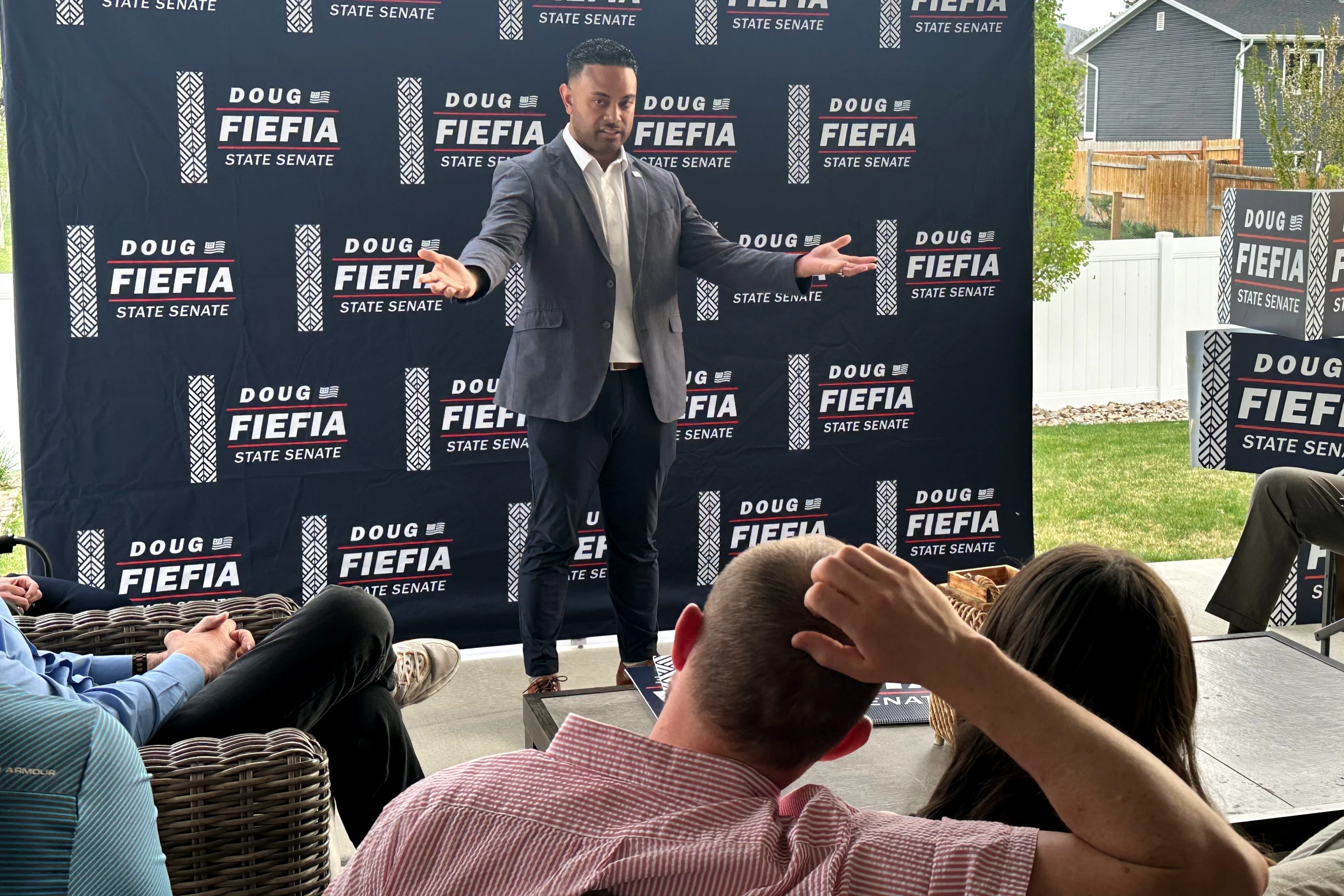
In Riverton, a group of Republican activists recently met in a suburban backyard near Salt Lake City to discuss upcoming elections. Their conversation touched on familiar conservative concerns in the state, including water shortages, immigration-related fraud, and even conspiracy theories.
However, Doug Fiefia, a state representative campaigning for a senate seat, shifted attention to a different issue—artificial intelligence. Drawing from his background as a former employee of Google, he has made AI regulation a central theme of his political agenda.
Fiefia acknowledged that his repeated focus on the topic might seem excessive to some, but emphasized that AI is already shaping society and will become a major policy battleground in the near future.
His stance has placed him at odds with the administration of Donald Trump, which recently opposed a proposal from Utah that would have required companies to implement child safety measures in AI systems. The federal government is advocating for a unified national framework, warning that varied state-level rules could slow innovation and weaken the country’s position against competitors like China.
With Congress yet to establish comprehensive legislation, individual states have taken the lead in addressing the rapid growth of AI. For instance, Ron DeSantis has included the issue in a special legislative session in Florida, while lawmakers in New York have already mandated that major AI developers report potentially harmful incidents to state authorities.


















No comments yet
Be the first to share your thoughts on this article.