
Starting an online business in Nigeria can open the door to more customers, but one of the first questions business owners ask is: How much does it cost to build an e-commerce website in Nigeria?
The answer depends on the size of your business, the number of products you want to sell, the features you need, your preferred technology, and how customers will pay for and receive their orders.
A simple online store with a small product catalogue requires less development work than a large e-commerce platform with advanced inventory management, automated delivery, customer accounts, and custom business features.
For businesses planning to sell products online, understanding these costs can help prevent overspending and make it easier to choose the right solution.
In this guide, we explain the estimated cost of building an e-commerce website in Nigeria in 2026, the factors that influence pricing, ongoing expenses, and how to choose a suitable developer.
How Much Does an E-commerce Website Cost in Nigeria in 2026?
As a general planning guide, building an e-commerce website in Nigeria may cost approximately ₦400,000 to ₦1,500,000 for many standard small-business stores, while more advanced or highly customized platforms can cost several million naira. These are indicative estimates, not fixed industry prices. The actual amount depends on the project requirements and the developer's quotation.
The following ranges can help you plan your budget.
Type of e-commerce websiteEstimated development cost
Basic online store | ₦400,000–₦700,000
Professional e-commerce website | ₦700,000–₦1,500,000
Advanced e-commerce website | ₦1,500,000–₦3,500,000+
Custom marketplace or complex commerce platform | ₦3,500,000+
These figures are broad planning estimates. A smaller template-based store may cost less, while a specialized platform with complex workflows may cost significantly more.
Basic online store: Suitable for a small business selling a limited range of products with standard checkout and straightforward delivery arrangements.
Professional e-commerce website: Suitable for a growing business that needs a more refined design, product variations, customer accounts, promotions, product filtering, and better sales management.
Advanced e-commerce website: Suitable for businesses that need more sophisticated inventory features, multiple integrations, detailed reporting, or customized workflows.
Custom marketplace: Suitable for a business that wants multiple vendors, vendor dashboards, commissions, specialized payment flows, or other marketplace functionality.
The best option is not necessarily the most expensive one. It is the one that meets your business needs without introducing unnecessary costs.
What Is Included in an E-commerce Website?
An e-commerce website is more than a collection of product pictures. It is an online selling system that allows customers to browse products, place orders, and complete purchases.
A professionally developed store may include the following features.
1. Homepage and product catalogue
The homepage introduces the business and directs visitors to important products and categories. The product catalogue organizes items so customers can find what they want.
Each product may have images, descriptions, prices, stock information, and available variations such as size, colour, or model.
2. Shopping cart and checkout
The shopping cart allows customers to review the items they want to buy before completing an order.
The checkout process collects the information needed to process the purchase. A clear and simple checkout can make buying easier for customers.
3. Online payment integration
A Nigerian e-commerce website may integrate payment services such as Paystack or Flutterwave, depending on the business requirements and provider eligibility.
Payment integration enables customers to pay online using supported methods. The project budget should account for implementation, testing, and any applicable transaction fees charged by the payment provider.
4. Order management
An administrative dashboard allows the business to view orders and update their status, such as pending, processing, dispatched, or completed.
This helps the business keep track of purchases and coordinate order fulfilment.
5. Mobile-friendly design
Many customers browse websites on smartphones. An e-commerce website should therefore work well on mobile devices, including when customers search for products, add items to their carts, and complete checkout.
6. Product and inventory management
Product management allows the business to add products, edit descriptions, update prices, and upload images.
More advanced inventory functionality can track stock quantities and help prevent customers from ordering unavailable items.
7. Search engine optimization
Basic SEO helps search engines understand the website and its product pages. This may include descriptive page titles, meta descriptions, clean URLs, product information, and a logical website structure.
SEO does not guarantee rankings or sales, but it helps establish a foundation for organic visibility.
7 Factors That Affect E-commerce Website Development Cost in Nigeria
1. Website design and customization
A store built using a ready-made theme usually requires less design work than a fully customized storefront.
The cost may increase when the business needs unique page layouts, specialized product displays, custom checkout experiences, or extensive revisions.
For a startup, a well-configured theme may be sufficient. An established brand may benefit from a more customized design that reflects its identity and customer experience goals.
2. Number of products
The size and complexity of the product catalogue can affect the time required to prepare and upload products.
A store with 20 products and straightforward descriptions is different from one with thousands of products, multiple sizes, colours, product variations, and detailed specifications.
Before development begins, determine who will prepare the product information and whether the developer is responsible for uploading the catalogue.
3. Payment gateway integration
Customers need a reliable way to pay for their purchases.
Integrating a payment gateway requires configuration and testing to ensure that transactions and order statuses are handled correctly.
The development cost depends on the complexity of the integration. Transaction charges are separate operational expenses and should be checked with the selected provider.
4. Delivery and shipping functionality
Businesses need a process for delivering orders to customers.
A basic store may use manually arranged delivery or straightforward delivery fees. A more advanced store may require location-based delivery charges, shipping rules, courier integrations, and order tracking.
The more complex the delivery process, the more development and testing it may require.
5. Choice of e-commerce platform
Your technology choice affects both the initial development cost and the ongoing cost of operating the store.
Popular options include WooCommerce, Shopify, and custom-built solutions. Each has different setup requirements, subscription or hosting arrangements, customization options, and maintenance responsibilities.
The best choice depends on your budget, technical requirements, and long-term plans.
6. Advanced features and integrations
Additional features can increase the overall project cost. Examples include:
- Customer registration and account dashboards.
- Discount codes and promotional campaigns.
- Product reviews and ratings.
- Automated email or order notifications.
- Inventory synchronization across branches.
- Integration with accounting or business management software.
- Multiple vendors and commission management.
- Custom reporting and analytics.
Businesses should prioritize features that solve current problems and add more functionality when there is a clear business need.
7. Developer experience and project scope
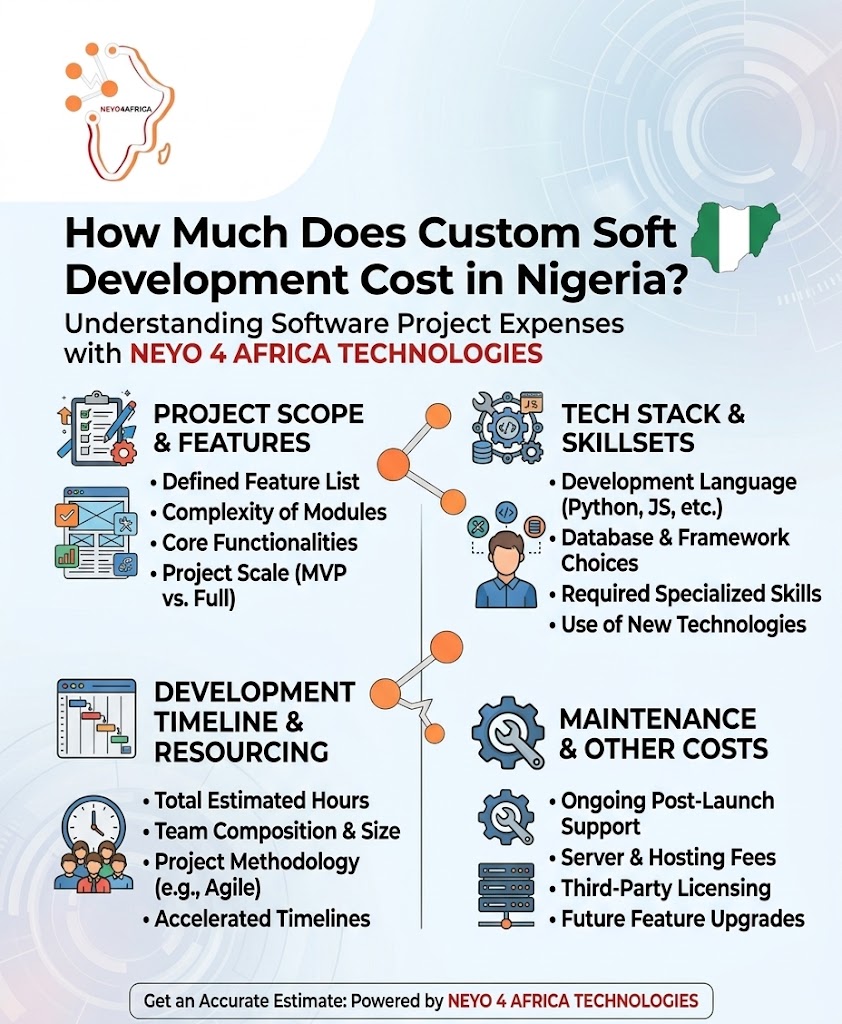
Different developers may provide different quotations because their experience, development approach, project scope, testing standards, and support arrangements vary.
When comparing quotations, look beyond the headline price. Confirm the deliverables, project timeline, number of revisions, payment terms, website ownership, and post-launch support.
A detailed written quotation makes it easier to compare what each developer is actually offering.
WooCommerce vs Shopify vs Custom E-commerce Development
Choosing the right platform is an important part of budgeting for an online store.
OptionBest suited forImportant cost consideration
WooCommerce | Businesses wanting a WordPress-based store with flexible customization | Hosting, extensions, setup, security, and maintenance
Shopify | Businesses wanting a hosted e-commerce platform | Subscription fees, apps, payment arrangements, and customization
Custom-built e-commerce | Businesses with specialized workflows or integration requirements | Development, testing, hosting, maintenance, and technical support
WooCommerce and Shopify can be practical choices for businesses that need standard online-store functionality. A custom-built system may be more suitable when the business has requirements that existing platforms cannot adequately meet.
There is no universal winner. Compare the total cost of ownership, including ongoing expenses, before making a decision.
Additional Costs to Budget for After Development
One mistake business owners make is budgeting only for the initial development of the website.
An online store may require ongoing expenses after launch.
Domain name and hosting
The domain is the website's address, while hosting provides the infrastructure needed to make the website accessible online.
The cost depends on the domain extension, hosting plan, traffic, storage, performance requirements, and hosting provider.
Website maintenance and security
Regular maintenance may include software updates, backups, security checks, bug fixes, and performance monitoring.
The maintenance arrangement should clearly state which tasks are covered and whether additional development work attracts separate charges.
Payment processing fees
Payment providers may charge transaction fees for successful payments. These charges affect the cost of operating the store and should be verified with the chosen provider before launch.
Product photography and content
Product images and descriptions help customers understand what they are buying. Businesses may need to budget for photography, image editing, product descriptions, and catalogue preparation.
Marketing and customer acquisition
Launching a website does not automatically bring customers. Businesses may need to invest in search engine optimization, social media marketing, paid advertising, email marketing, or other promotional activities.
These expenses are separate from website development and should be included in the overall business budget.
How to Reduce the Cost of Building an E-commerce Website
If your budget is limited, you can still plan a useful online store by focusing on essential features first.
Start with a clear product catalogue. Launch with the products you can properly describe, price, and fulfil instead of delaying the project while preparing an unnecessarily complicated catalogue.
Choose a suitable platform. Use a ready-made solution when it meets your requirements instead of paying for custom development without a clear reason.
Prioritize essential features. Begin with product pages, a cart, checkout, payment integration, order management, and mobile responsiveness.
Prepare your content early. Supplying product images, descriptions, prices, and business information can reduce delays and avoid additional content-preparation costs.
Add advanced functionality gradually. Features such as complex automation, advanced inventory integrations, or marketplace functionality can be introduced when the business needs them.
Compare detailed quotations. Ask developers to separate essential deliverables from optional features so you can make informed decisions.
Reducing unnecessary complexity is more useful than choosing the cheapest quote without checking its scope.
How to Choose an E-commerce Website Developer in Nigeria
The developer you choose can affect the quality, usability, and long-term maintenance of your store.
Before hiring a developer or agency, consider these questions:
- Have they developed e-commerce websites with similar requirements?
- Can they demonstrate relevant projects?
- Does their quotation specify the features and deliverables?
- Will the website work properly on smartphones?
- How will payments, orders, and customer data be handled?
- Who will own and control the domain, hosting, and website accounts?
- What training, maintenance, and technical support are included?
- What is the expected delivery timeline?
- Are additional features and changes priced clearly?
Ask for a written proposal that describes the project scope, timeline, payment milestones, testing, launch arrangements, and post-launch responsibilities.
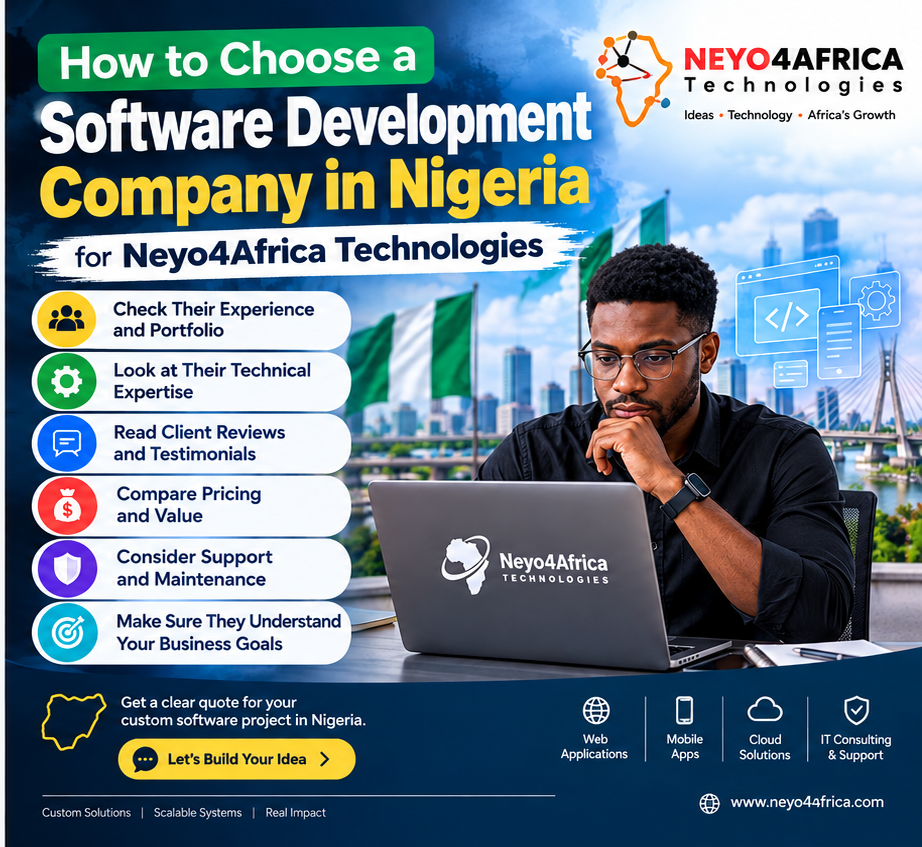
For more guidance, read our related article: How to Choose a Software Development Company in Nigeria.
Why Nigerian Businesses Should Invest in a Well-Planned E-commerce Website
A well-designed online store can help a business present its products professionally, receive orders online, organize product information, and serve customers beyond its immediate physical location.
It can also make it easier to manage product updates and provide customers with a consistent way to browse and purchase products.
However, success depends on more than the website itself. Product quality, pricing, customer service, delivery reliability, marketing, and effective order management all contribute to the business's performance.
Before investing, define what the website should achieve and how you will measure its success.
Build Your E-commerce Website with Neyo4Africa Technologies
If your business is planning to sell products online, the first step is to identify the features you need and the problems your website should solve.
Neyo4Africa Technologies offers software development services for businesses that need digital solutions tailored to their requirements.
Whether you are planning a small online store or a more advanced commerce platform, a clear project scope can help you understand the development work, prioritize features, and prepare a realistic budget.
Explore our Software Development Services to learn more about building digital solutions for your business.
Frequently Asked Questions
How much does a basic e-commerce website cost in Nigeria?
A basic online store may cost approximately ₦400,000–₦700,000 as an initial planning estimate. The actual quotation depends on the platform, design, number of products, payment integration, delivery requirements, and included support.
Can I build an e-commerce website with ₦200,000?
It may be possible to launch a very small store within this budget using a template or hosted solution, depending on the provider and included services. However, extensive customization, large product uploads, advanced inventory, integrations, and ongoing support may not fit within the same budget.
How long does it take to build an e-commerce website?
A straightforward online store may take several weeks, while a complex or custom-built platform can take several months. The timeline depends on the features, availability of product content, integration requirements, feedback, and testing.
Do I need a mobile app as well as an e-commerce website?
Not necessarily. A mobile-friendly website is often a sensible starting point for a business selling online. A dedicated mobile app can be considered later if customer needs and business operations justify the additional development and maintenance costs.
Does an e-commerce website automatically generate sales?
No. A website provides a platform for selling products, but sales depend on factors such as product demand, pricing, customer trust, website usability, marketing, payment options, and delivery.
What should I prepare before requesting a quotation?
Prepare a list of products, required features, preferred payment methods, delivery arrangements, expected users, budget, and any systems the store must connect to. This information helps developers estimate the project more accurately.
Final Thoughts
The cost of building an e-commerce website in Nigeria depends on the type of store you want to create and the functionality your business requires.
A basic store may be sufficient for a new business, while a growing company may need a more sophisticated platform with advanced inventory, integrations, and reporting.
Before committing to a developer, define your requirements, compare written quotations, and budget for ongoing expenses as well as the initial build.
Are you planning to launch an online store in Nigeria? Which products do you want to sell, and what features would you need on your website? Share your thoughts in the comments.















No comments yet
Be the first to share your thoughts on this article.